

A new blood test aimed at helping doctors diagnose colorectal cancer – the second-leading cause of U.S. cancer deaths – was recently approved by the Food and Drug Administration.
SimpleScreen, made by the California biotech company Freenome, is designed for adults aged 45 and older who are at average risk for the life-threatening disease. It’s designed to detect DNA signals that are linked to colorectal cancer in this age group.
Following a blood draw at a doctors’ office, results are returned in just a couple of weeks. If the test comes back positive, then patients will need a colonoscopy to confirm if there are signs of cancer.
The goal is convenience – because not enough people are getting screened, experts say. Researchers who worked on the test say they hope it can offer another avenue for people.
“Many people who should be screened for colorectal cancer simply aren’t,” Dr. Aasma Shaukat, a professor of medicine at NYU Grossman School of Medicine, said in a statement. “A blood-based test provides another way to reach unscreened patients, and bringing more people into the screening fold leads to earlier detection and better outcomes.”
 open image in gallery
Shaukat was the co-lead principal investigator on a study of the test – the largest study conducted for such a test so far.
The study included more than 48,000 average-risk adults aged 45-85 who were scheduled for a screening colonoscopy, finding that SimpleScreen CRC detected about eight in 10 colorectal cancers, while producing correct negative results for nine in ten people without colorectal cancer or advanced precancerous lesions.
The test is the second approved by the FDA for colorectal cancer screening. Guardant Health’s Shield test was approved in 2024.
A clinical trial of shield found that it is able to detect more than eight in 10 colorectal cancers — but it was less effective at detecting Stage 1 colorectal cancers, according to New York City’s Memorial Sloan Kettering’s Cancer Center.
“Further investigation would be needed to appropriately determine the comparative effectiveness of SimpleScreen CRC with other FDA-approved screening modalities,” Dr. Paul Limburg, chief medical officer for screening at Abbott’s cancer diagnostics business, told Verywell. “Colorectal cancer screening is not one-size-fits-all.”
Shield is free for patients with Medicare Part-B. Patients without Medicare may have out-of-pocket prices up to $1,495.
It’s not know how much these tests will cost, but they are expected to be made available to patients this fall in partnership with Illinois healthcare company Abbott.
 open image in gallery
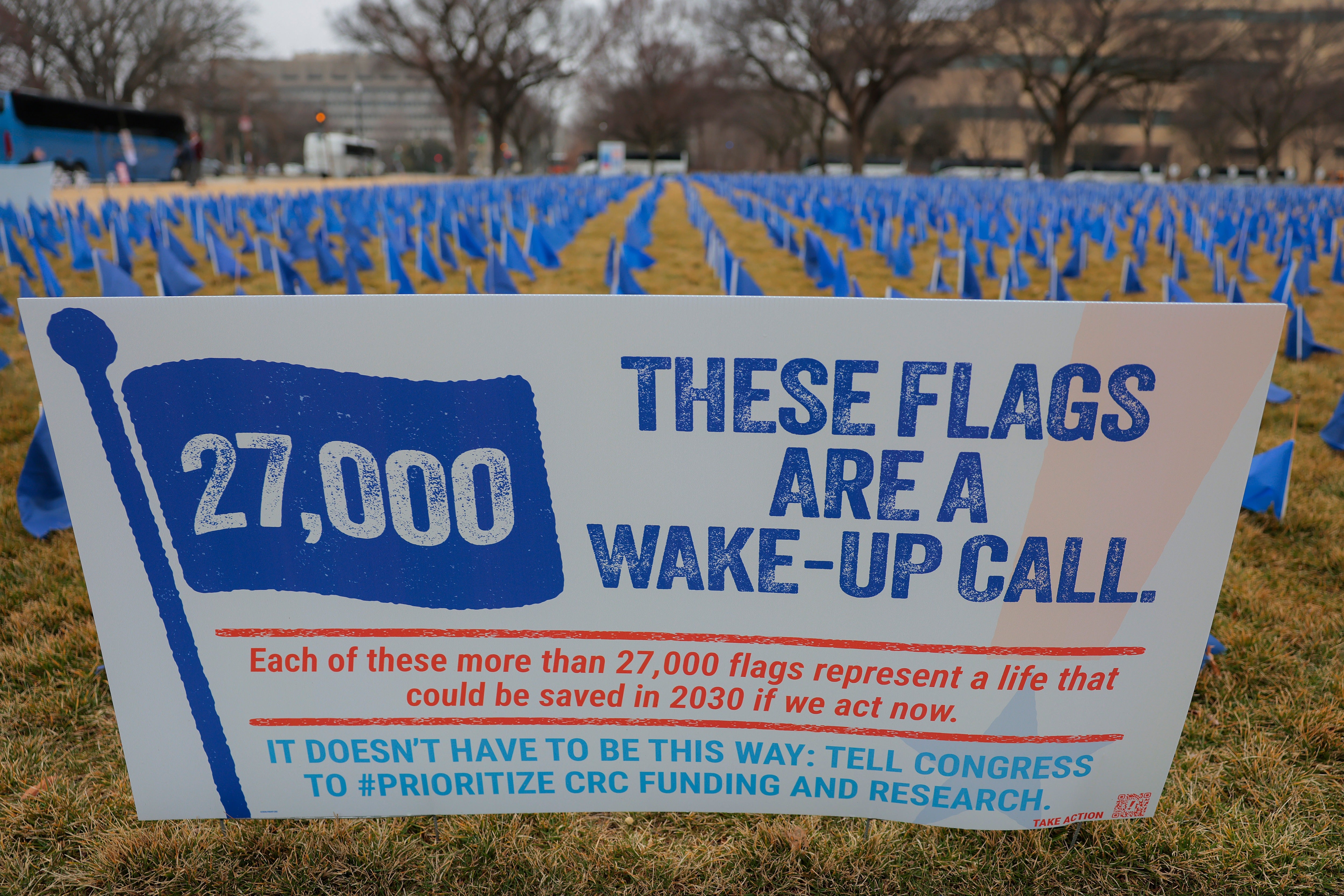
The approval comes as the rates of colorectal cancer are spiking in the U.S., especially among young adults.
That’s partially due to changed recommendations that lowered the screening age in 2021, but doctors also say an increasingly ultraprocessed diet, gut changes, environmental pollution and other unknown factors are at play.
This year nearly 109,000 new cases of colon cancer and close to 50,000 new cases of rectal cancer are expected, according to the American Cancer Society. That’s up from a projected 107,000-plus colon cancer cases and nearly 47,000 rectal cancer cases last year.
Some 12.7 out of 100,000 men and women stricken with colorectal cancer will die of the disease each year, according to the National Cancer Institute.
While death rates have been dropping in older Americans, they’ve been increasing by about a percentage point each year since the mid-2000s in younger adults.
By 2030, colorectal cancer is predicted to be the leading cause of cancer death for people under 50, according to the University of Washington. More than 55,000 deaths are forecast in 2026, the society says.