

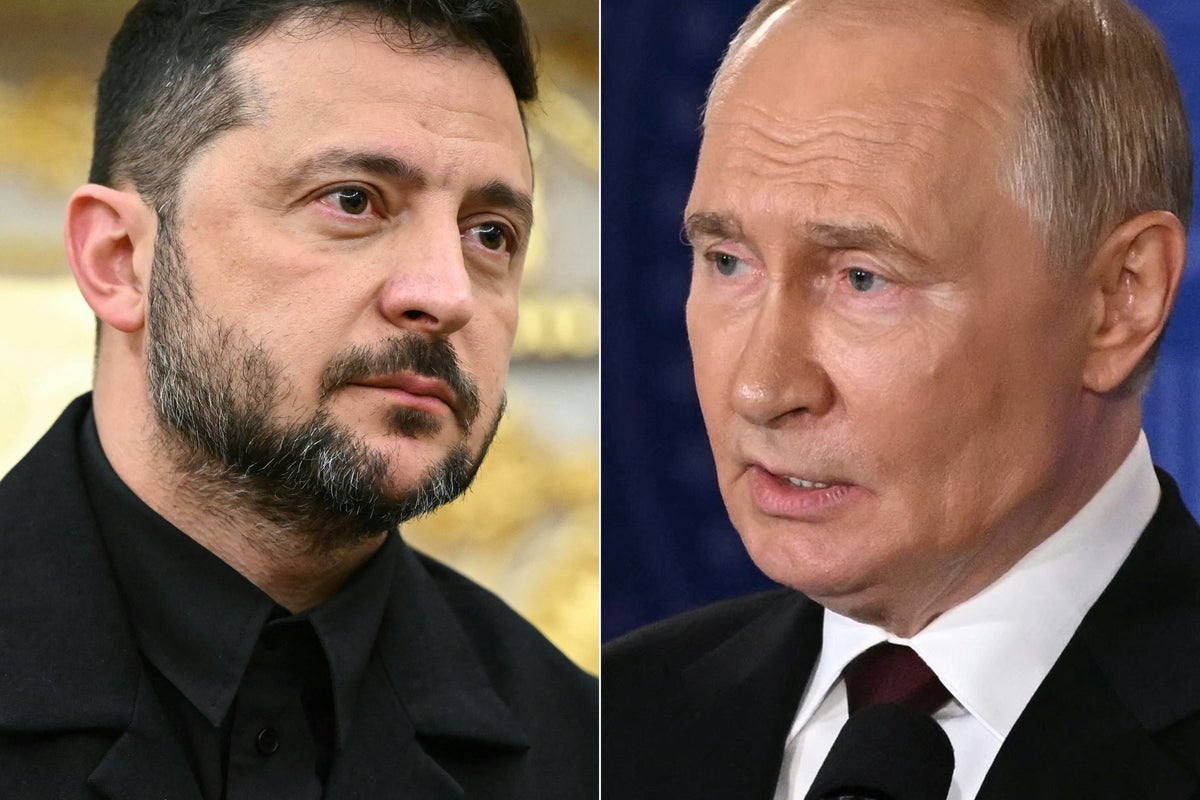
The US is pushing for a temporary ceasefire which would provide sanctions relief to Moscow, according to a report, as Washington looks to revive a flagging peace process.
"They want Ukraine to agree to as much as possible, or at the very least not to stand in the way," a source familiar with the matter told the Kyiv Independent.
The move comes after Donald Trump announced a three-day ceasefire between 9-11 May, a move which many saw as intending to ensure Moscow could carry out its Victory Day parade untarnished.
Although Trump said it would be “nice” if it lasted longer than three days, the truce has now come to an end, with Moscow launching 200 drones at Ukraine overnight into Tuesday according to Volodymyr Zelensky.
Mr Zelensky said Russia had no intention of ending the war, leaving Kyiv to brace for further attacks.
Russia's Defence Ministry said the ceasefire had expired and that its forces had resumed combat operations, Russian news agencies reported. It added that Russian air defence systems had shot down 108 drones in the past 24 hours.
Recommended
 Zelensky’s ex-chief of staff named in major corruption probe that shocked Ukraine
 The ex-German chancellor and Putin’s ‘buddy’ who Russia want to mediate Ukraine peace talks
 Russia and Ukraine trade blame for continued fighting as US-brokered ceasefire nears its end
 UK faces biggest fall in consumer confidence since start of Ukraine war, research suggests
US pushing to provide sanctions relief to Moscow – report
The US is pushing to provide sanctions relief to Moscow as part of a temporary ceasefire, according to a report.
It comes as the Trump administration looks to revive a flagging peace process.
"They want Ukraine to agree to as much as possible, or at the very least not to stand in the way," a source familiar with the matter told the Kyiv Independent.
The move comes after Donald Trump announced a three-day ceasefire between 9-11 May, a move which many saw as intending to ensure Moscow could carry out its Victory Day parade untarnished.
Zelensky says Russia launched over 200 drones at Ukraine overnight
Russia launched more than 200 drones overnight at Ukraine, president Volodymyr Zelensky said on Tuesday.
“Overnight, more than 200 attack drones were launched against Ukraine. Aerial bombs were used again on the front – more than 80 of them, and over 30 air strikes were recorded. Attack drones were shot down in the Dnipro, Zhytomyr, Mykolaiv, Sumy, Kharkiv, and Chernihiv regions, as well as in Kyiv and the region,” Zelensky said on X this morning, sharing photos of the areas hit in the overnight strikes.
He added that energy facilities, apartment buildings, and a kindergarten were damaged in the attack.
“…there was also a strike on an ordinary civilian locomotive on the railway… People have been reported injured as a result of these strikes. And, unfortunately, there are fatalities,” he said.
Putin suggests war in Ukraine is ending
Vladimir Putin said after the Victory Day commemorations that he thought the war was coming to an end.
He said he would be willing to negotiate new security arrangements for Europe, with Germany's former chancellor, Gerhard Schroeder, as his preferred partner.
But European foreign ministers, meeting in Brussels on Monday, rejected Putin's suggestion about Schroeder. They dismissed any role for Schroeder, who has worked for Russian state companies and cultivated a close relationship with Putin.
Russian state news agencies reported yesterday that Russia's defence ministry had said it had recorded 23,802 ceasefire violations by Ukraine since the start of the ceasefire.
Russian troops had responded in kind to Ukrainian attacks, the ministry was quoted as saying.
The ex-German chancellor and Putin’s ‘buddy’ who Russia want to mediate Ukraine peace talks
Vladimir Putin hinted over the weekend that he foresaw the war in Ukraine coming to an end soon, while raising the prospect of talks with the EU to draw up new security arrangements for a post-war Europe.
The Russian president told reporters that he would be open to reopening lines of communication with Ukraine and Europe, ideally mediated by former German chancellor Gerhard Schröder.
“For me personally, the former Chancellor of the Federal Republic of Germany, Mr Schröder, is preferable,” Putin said, asked on Saturday if he was willing to engage with Europe.
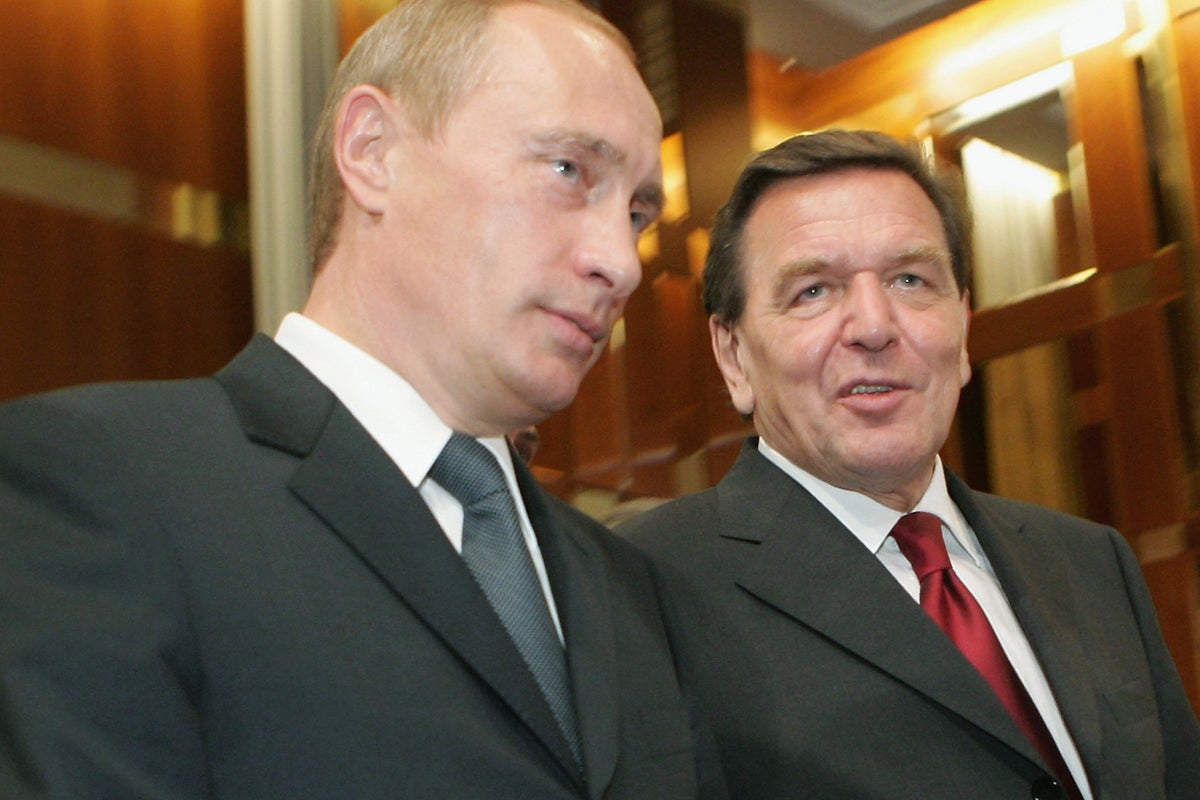
The ex-German chancellor and Putin ally who Russia want to lead Ukraine peace talks
Schröder called Putin a ‘flawless democrat’ and took roles in Russian energy after leaving officeArpan Rai
UK sanctions dozens over 'Russian campaign to deport and indoctrinate Ukrainian children'
The UK has sanctioned dozens of people and entities allegedly involved in the forced deportation, indoctrination and militarisation of Ukrainian children.
New measures target 29 people linked to a Russian campaign to forcibly deport and militarise children, and a further 56 linked to information warfare.
More than 20,000 Ukrainian children have been forcibly transferred or deported to Russia and within the occupied territories of Ukraine.
Among those forcibly deported, an estimated 6,000 children have reportedly been taken to re‑education camps and subjected to propaganda designed to erase Ukrainian identity.
As part of their response, the UK unveiled an additional £1.2m in funding to help identify and return Ukrainian children to their homes and communities.
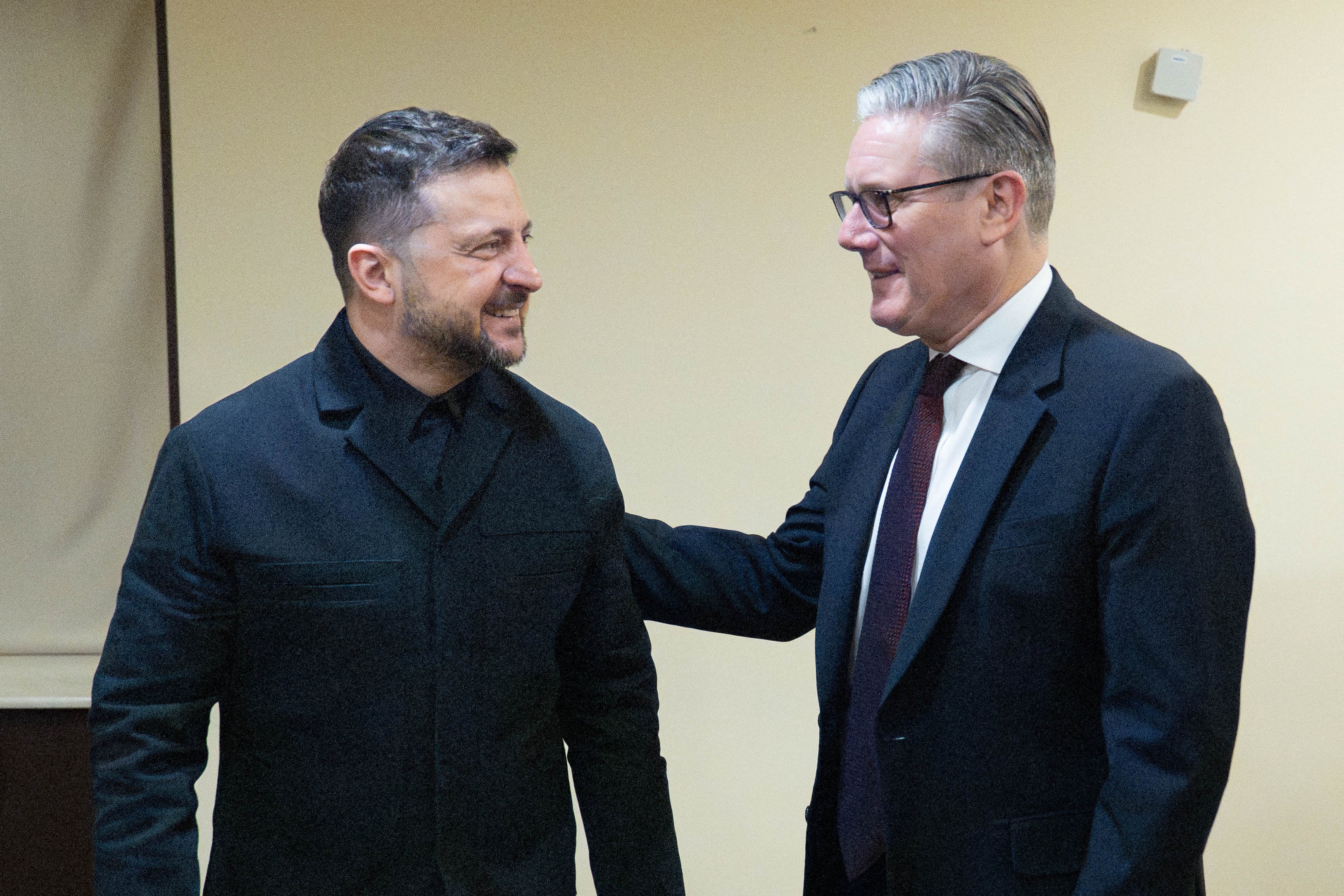
Ukraine suggests 'ceasefire' for airports with Russia
Ukraine’s foreign minister Andrii Sybiha said Europe can help the war-hit nation achieve a ceasefire with Russia – starting with each other’s airports first.
“We probably need a new role of Europe in our peace efforts. Maybe we would try to resolve or to achieve a so-called airport ceasefire,” Sybiha told Politico yesterday in Brussels.
Sybiha, a close-aide of Volodymyr Zelensky said the proposal seeks a limited Moscow-Kyiv agreement not to strike airports which helps Putin as well.
The Russian leader, he said, may have an incentive to engage with such a deal which helps him protect major Russian hubs like Moscow's Sheremetyevo International Airport and St Petersburg's Pulkovo Airport.
"Maybe our European allies, by establishing a platform, or maybe an ad hoc group, we could discuss [the airport ceasefire]," he said.
Sybiha said Zelensky has already discussed the idea with some European leaders.
Europe rejects Putin’s pick for peace mediator: 'Not very wise'
The EU’s foreign policy chief on Monday rejected Vladimir Putin’s suggestion that former German chancellor Gerhard Schröder could represent Europe in future talks with Moscow on European security arrangements.
Putin told reporters on Saturday that he believed the war was “coming to an end”, and said he would be open to negotiating new security terms with Europe, ideally via Schröder as a mediator.
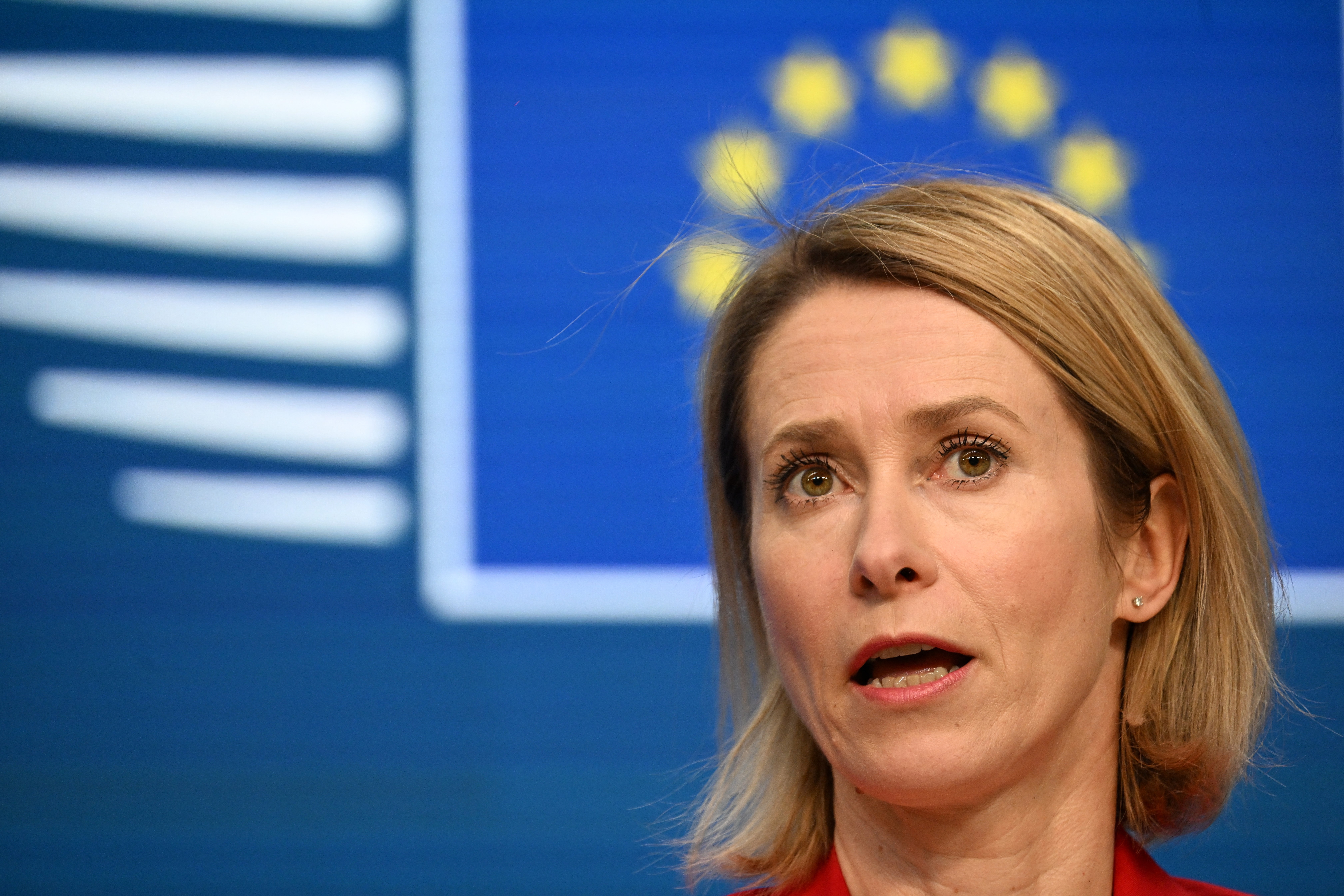
But Kaja Kallas dismissed the offer this morning as she arrived for a meeting of EU foreign ministers in Brussels.
“If we give the right to Russia to appoint a negotiator on our behalf, you know, that would not be very wise,” she said, adding that as Schroder had lobbied for Russian state companies, “he would be sitting on both sides of the table”.
After leaving office in 2005, Schroeder almost immediately took a job as chairman of a controversial German-Russian gas pipeline consortium and has faced heavy criticism in Germany for his closeness to Putin.
European Council President Antonio Costa said last week he believed there was "potential" for the EU to negotiate with Russia, and to discuss the future of the security architecture of Europe.
Watch: Zelensky says Russia has ‘no intention’ of ending war
Ukraine reports 180 battlefield clashes as fighting kills three
The General Staff of Ukraine's military, in a Monday morning report, said 180 battlefield clashes had been recorded along the front line over the previous 24 hours.
The General Staff said on Monday afternoon that Russian troops had carried out 38 new assaults on Ukrainian positions, adding: "Artillery shelling of border areas continues."
Regional governors in Ukraine reported on Monday that at least three people had been killed in the southeastern Zaporizhzhia and southern Kherson regions over the past 24 hours.
EU targets Russians with sanctions over alleged abduction of Ukrainian children
The European Union has imposed sanctions on 16 officials accused of helping Russia to abduct tens of thousands of children from Ukraine and force many to change their identities or be put up for adoption.
Sanctions were also slapped on seven centres suspected of indoctrinating the children or training them to serve in the armed forces, either for Russia or pro-Russian militias inside Ukraine.
Over 130 people and “entities” are now under EU travel bans and asset freezes over the abductions.
EU headquarters said the measures target “those responsible for the systematic unlawful deportation, forced transfer, forced assimilation, including indoctrination and militarized education, of Ukrainian minors, as well as their unlawful adoption and removal to the Russian Federation and within temporarily occupied territories.”
Since Russia launched its full-scale invasion of Ukraine in early 2022, about 20,500 children have been unlawfully deported or forcibly transferred to Russia or Russian-held territories in eastern Ukraine.
EU officials say many of the children are stripped of their Ukrainian identity and culture, given Russian passports and put up for adoption. Some are forced into schools for indoctrination or into military camps.
“Russia is trying to erase their identity,” Latvian foreign minister Baiba Braže said yesterday at a meeting with EU counterparts in Brussels, where the sanctions were endorsed.
“When you look at the Genocide Convention, it’s one of the features of the genocide crime. So, it’s very serious.”